Emily Ebbs:
An Essential Alchemy
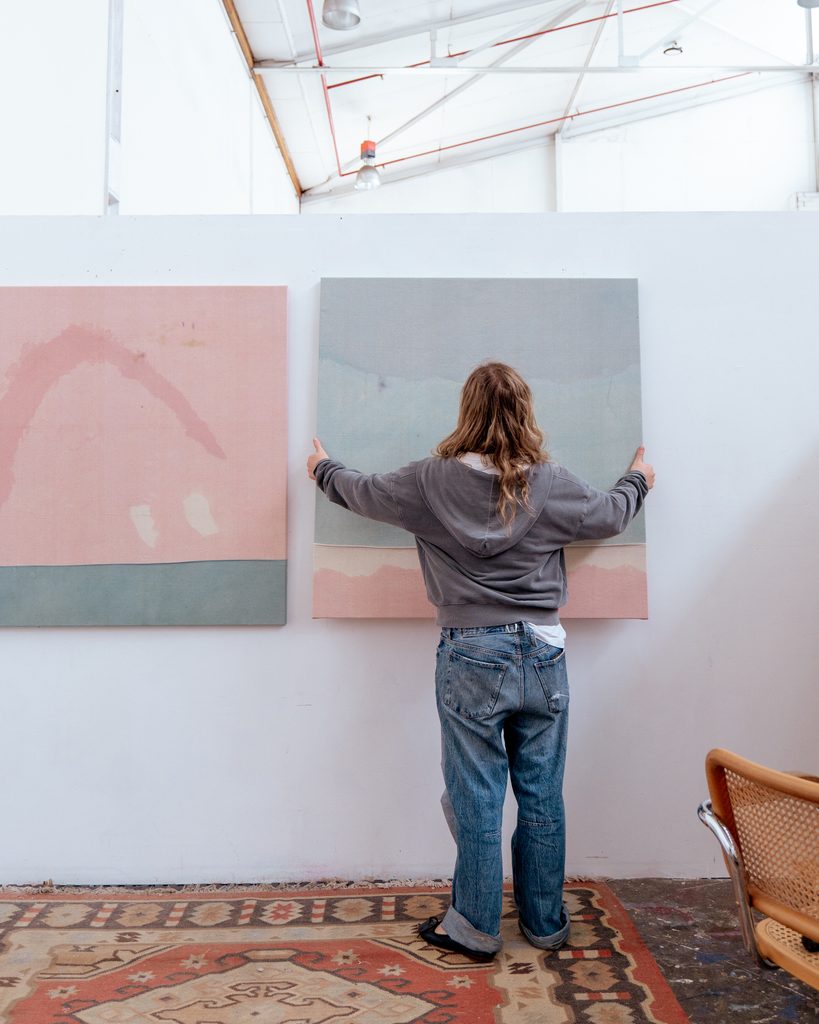
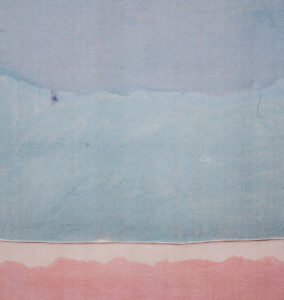
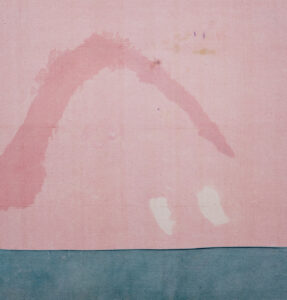
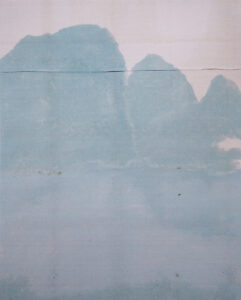
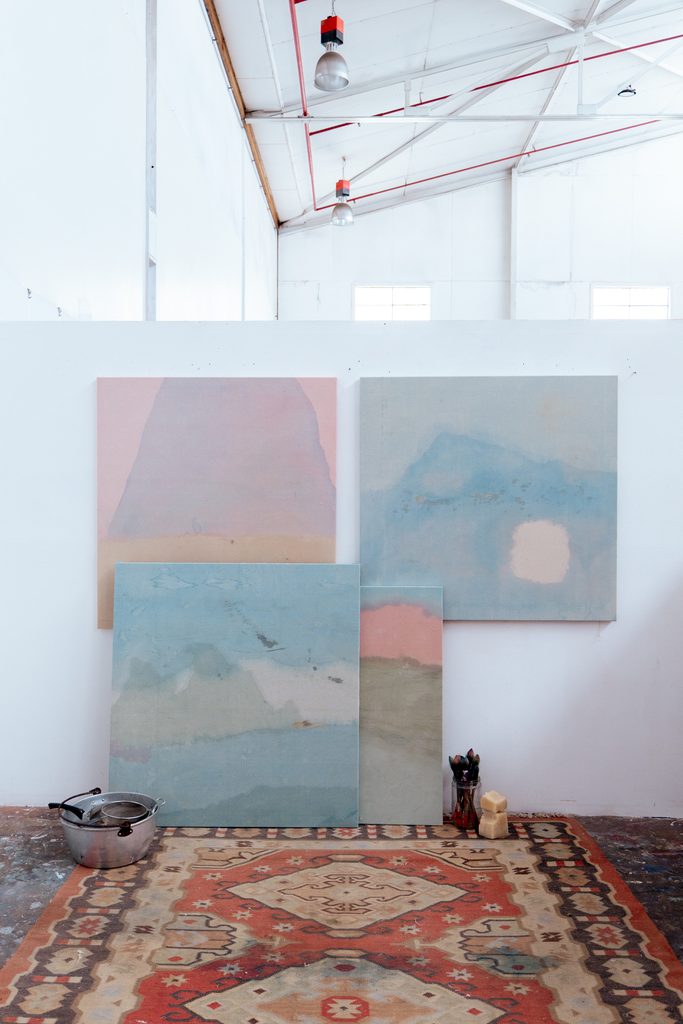
There is an essential alchemy to the way Emily Ebbs creates – foraging, boiling, preparing, mixing, and dyeing. Below, we enter her inner landscape to discuss ritual, Irish Folklore, and embodied practice.
Your process blends traditional painting techniques with what might be considered ‘unconventional’ materials in contemporary Western painting. How did materials like beeswax, wintergreen oil and eucalyptus find their way into your practice?
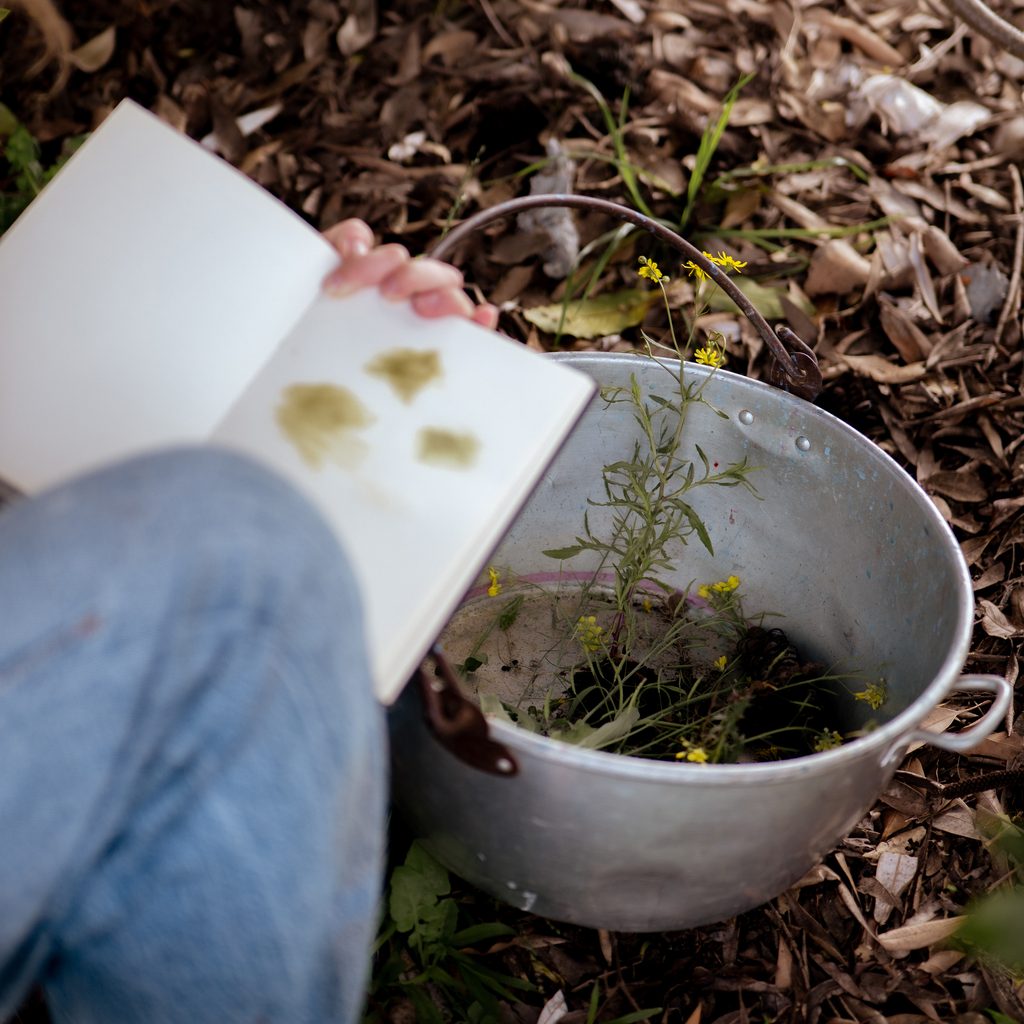
It began when my practice went outside of the studio – I stopped simply looking inward and started turning to my environment. The scent of things drew me to them; wanting to be surrounded and held by the smells of nature and things that made me feel grounded and present. A residency with the Corridor Project on Wiradjuri Country back in 2024 was the first time I foraged for organic materials to paint with after I challenged myself not to bring any paint with me. Since then it just remained in my process – it’s something that just feels so right that I could never go back. A few years ago my practice was mainly internal, looking at my internal landscape, but bringing the landscape in and collaborating with it feels like I’m working with something that is much greater than myself. Trying to make sense of things through the portal of the natural world is endless.
There is an element of relinquishing control in your work. At what point in your process does the body end and nature begin?
My practice is one of the few places in this life where I can surrender. It is not so much that I give up control, but that control gives in to me. Control is interesting because the more I try to give it up, the harder it sticks. Surrender, it seems, is less something I can choose to do, and more something that naturally arises when I feel supported. When I paint, I create an ecosystem that makes sense to me.
I don’t see a defined separation between the human body and nature. For me, they are woven together – I am nature, nature is me. The sacred threshold between my human body and everything else is porous and pulsating. When I hear the river sing, it is not that I hear it, but that both myself and thee river meet in the middle to create each other – the river creates me through its song, and I create the river through listening. I can never say for certain where I begin and everything else ends.
“I don’t see a defined separation between the human body and nature. For me, they are woven together – I am nature, nature is me.”
Does your physical environment shape the work you make? How?
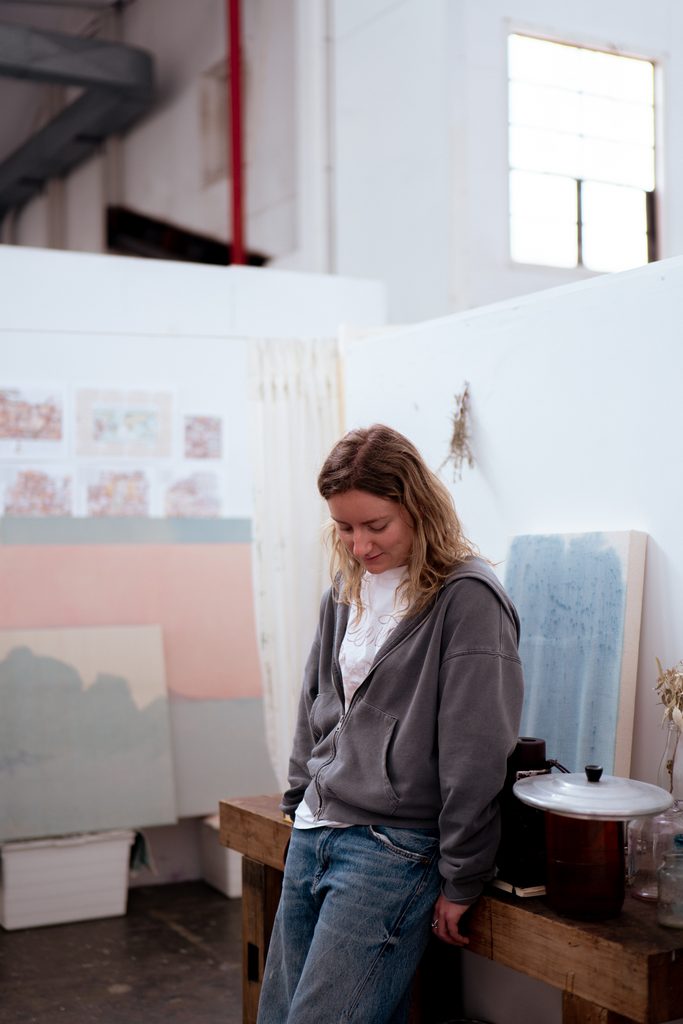
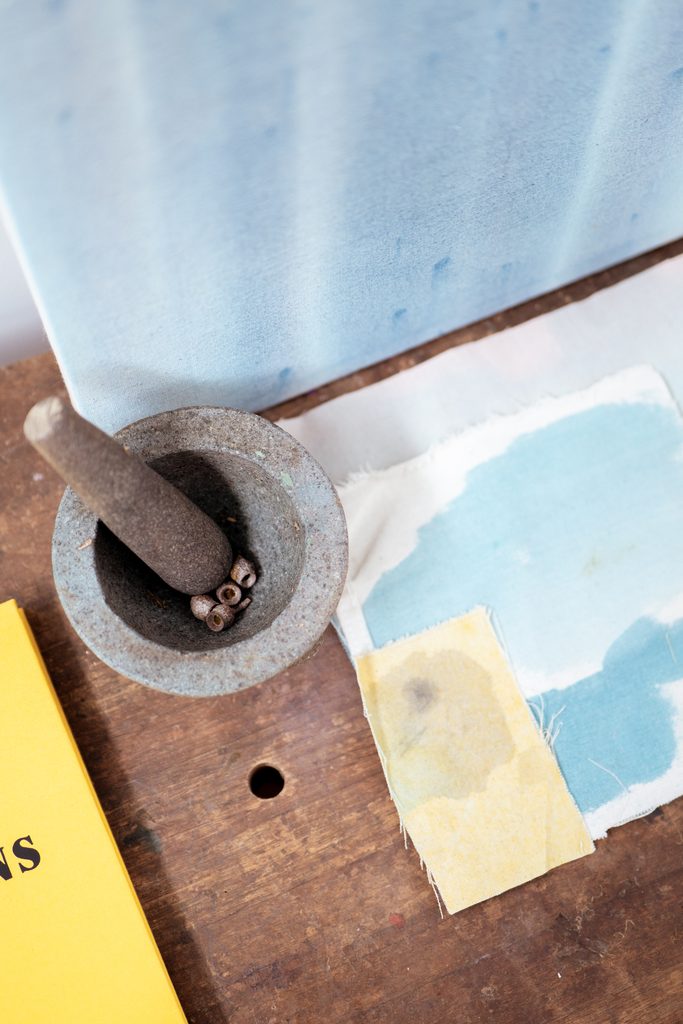
Definitely. My work has become informed by where I am. My most recent solo exhibition was created in Lutruwita/Tasmania, but if it were created here in my inner city studio, the work would have been completely different. I’m inspired by the natural landscape and my works are a quest to embody that landscape the way it is felt. Where I am and the season also decides how I collaborate with the environment. For example, at the moment I’ve created a bright yellow dye from wattle I have collected while out of the city. There are hundreds of wattle trees, but I can only collect from them for a short period. The artworks I can create from this medium will be limited and embody a landscape of a particular time.
You have recently been looking into your Irish heritage and its folklore. How has this informed your recent work?
Irish Folklore has brought the landscape to life. Looking at the mist settling across the hills isn’t just a cloud of tiny water droplets but a veil between worlds. It has changed the way I see and interact with nature. I’m looking at the stories of the Tuath Dé Danann and connecting with the inner landscape of what is a part of me and my heritage. Reading Folklore has broadened my outer horizon which in turn mirrors my inner landscape.
A lot of the titles from my work are derived from Folklore poems, songs, and riddles. There is always a sentence or a few words that sum up the feeling of a landscape and my place in it so beautifully and perfectly. As an artist, I’m more comfortable with a visual language, so it is difficult to describe with words what I’m feeling during the process of making. I’ll leave the words to the poets.
How important is the act of ritual for you?
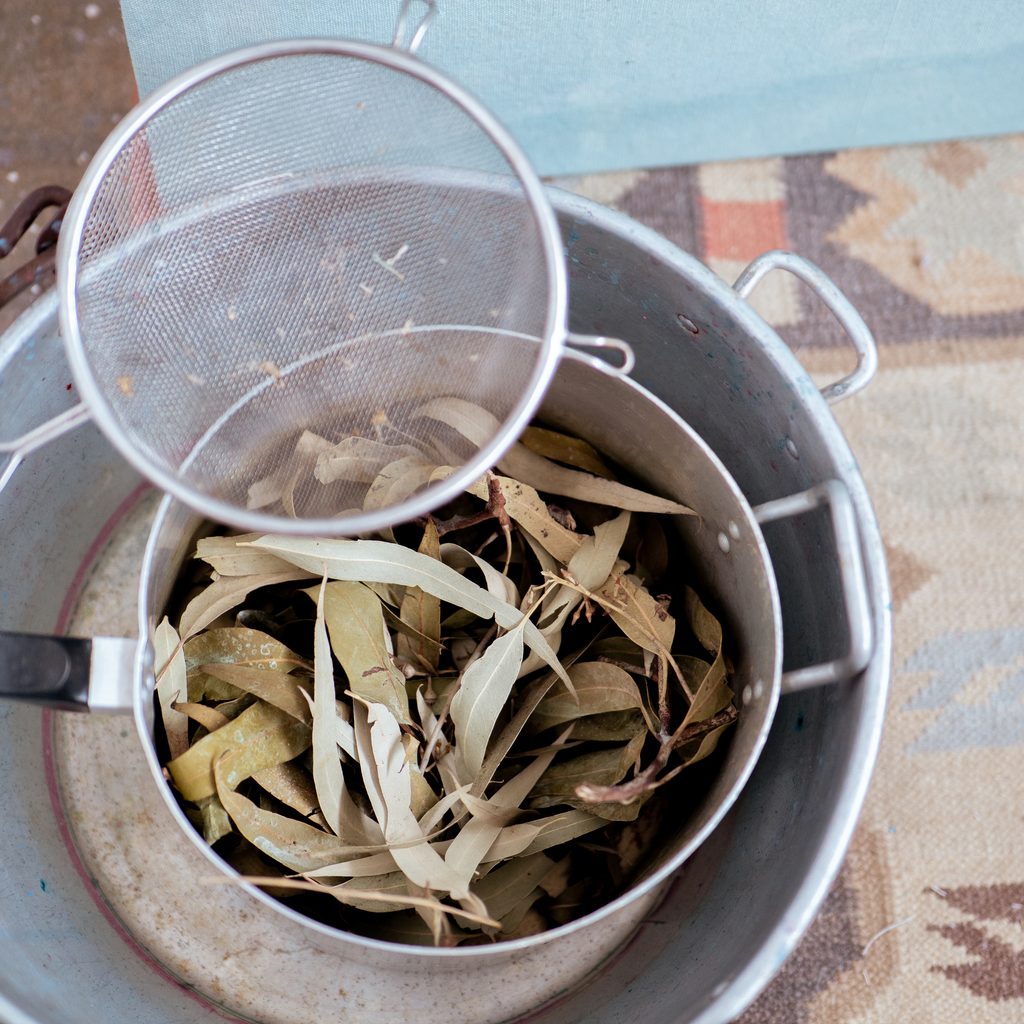
I don’t think I realise how present rituals are in my practice until I’m asked to dissect my practice. There are certain things I need to do as an entry point into a work. A pot of organic material (mainly eucalyptus leaves) needs to go on the boil and fill the studio with its scent. The action and the smell has become a calming, grounding ritual which says to my body “okay, it’s time to shut out the noise and go into another place”.
Ironing has weirdly become a ritual in my practice too. Using loose pieces of unstretched, unprimed canvas and painting on the floor creates creases, so in order to gain a clearer picture of where the work is going, I need to be constantly ironing them out. It’s become this beautiful way into a work, ironing close to the canvas on my knees, mirroring a kneeled prayer and then stepping away to observe the work. It’s become a meditative kind of practice. Repeated gestures and actions in my process, and even in my compositions, are where I feel I can enter into this meditative realm.
Photography by Marina Pilats.